Hry

Prečítate na zariadeniach:

  • Pocketbook
  • Kindle
  • Smartfón či tablet s príslušnou aplikáciou
  • Počítač s príslušnou aplikáciou

Nie je možné meniť veľkosť písma, formát je preto vhodný skôr pre väčšie obrazovky.

Viac informácií v našich návodoch

Prečítate na zariadeniach:

  • Pocketbook
  • Kindle
  • Smartfón či tablet s príslušnou aplikáciou
  • Počítač s príslušnou aplikáciou

Viac informácií v našich návodoch

Prečítate na:

Neprečítate na:

Ako čítať e-knihy zabezpečené cez Adobe DRM?
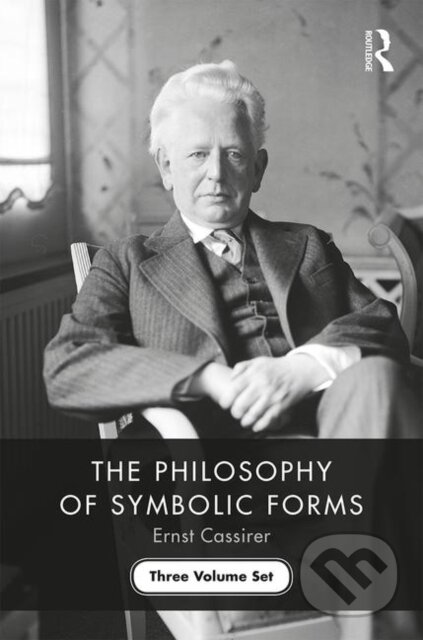
Kniha: The Philosophy of Symbolic Forms (Ernst Cassirer). Routledge, 2020

The Philosophy of Symbolic Forms

Three Volume Set

Ernst Cassirer occupies a unique space in Twentieth-century philosophy, and The Philosophy of Symbolic Forms is his most important work. This major new translation of all three... Čítať viac

Séria
The Philosophy of Symbolic Forms
Vydavateľstvo
Routledge, 2020
Počet strán
1254

Ernst Cassirer occupies a unique space in Twentieth-century philosophy, and The Philosophy of Symbolic Forms is his most important work. This major new translation of all three volumes, the first for over fifty years, brings Cassirer's magnum opus to a... Čítať viac

  • Pevná väzba
  • Angličtina
Cena: 303,00 €
Na objednávku
Dodanie môže trvať viac ako 30 dní
Tento produkt je na objednávku a jeho dodanie môže trvať aj viac ako 30 dní. Urobíme však všetko pre to, aby sme vašu objednávku odoslali čo najskôr a o jej ceste vás budeme včas informovať.

Naši škriatkovia odporúčajú

Škola volá. Učebnice a slovníky so zľavou 15 %. Využiť zľavu

Viac o knihe

Ernst Cassirer occupies a unique space in Twentieth-century philosophy. A great liberal humanist, his multi-faceted work spans the history of philosophy, the philosophy of science, intellectual history, aesthetics, epistemology, the study of language and myth, and more. Cassirer’s thought also anticipates the renewed interest in the origins of analytic and continental philosophy in the Twentieth Century and the divergent paths taken by the ''logicist'' and existential traditions, epitomised by his now legendary debate in 1929 with the philosopher Martin Heidegger, over the question "What is the Human Being?"The Philosophy of Symbolic Forms is Cassirer''s most important work. It was first published in German in 1923, the third and final volume appearing in 1929. In it Cassirer presents a radical new philosophical worldview - at once rich, creative and controversial - of human beings as fundamentally "symbolic animals", placing signs and systems of expression between themselves and the world.This major new translation of all three volumes, the first for over fifty years, brings Cassirer''s magnum opus to a new generation of students and scholars. Taken together, the three volumes of The Philosophy of Symbolic Forms are a vital treatise on human beings as symbolic animals and a monumental expression of neo-Kantian thought. Correcting important errors in previous English editions, this translation reflects the contributions of significant advances in Cassirer scholarship over the last twenty to thirty years. Each volume includes a new introduction and translator''s notes by Steve G. Lofts, a foreword by Peter E. Gordon, a glossary of key terms, and a thorough index.
Naše katalógové číslo
3824167
Originálny názov
The Philosophy of Symbolic Forms
Počet strán
1254
Väzba
pevná väzba
Rozmer
247×169 mm
Hmotnosť
2518 g
ISBN
9781138907256
Dátum vydania
25. 9. 2020
Jazyk
angličtina
Séria
The Philosophy of Symbolic Forms
Vydavateľstvo
Routledge
Kategorizácia

Našli ste chybu alebo škodlivý obsah? Dajte nám, prosím, vedieť!

Nahlásiť chybu alebo škodlivý obsah

Máte o knihe viac informácií ako je na tejto stránke alebo ste našli chybu? Budeme vám veľmi vďační, ak nám pomôžete s doplnením informácií na našich stránkach.

Hodnotenia

Ako sa páčila kniha vám?

...nenávisť voči sebe je presne to isté ako hrubý egoizmus a napokon vyvoláva tú istú strašnú osamotenosť a zúfalstvo.
Kniha: Stepný vlk (Hermann Hesse), 2016
Stepný vlk
  • Hermann Hesse